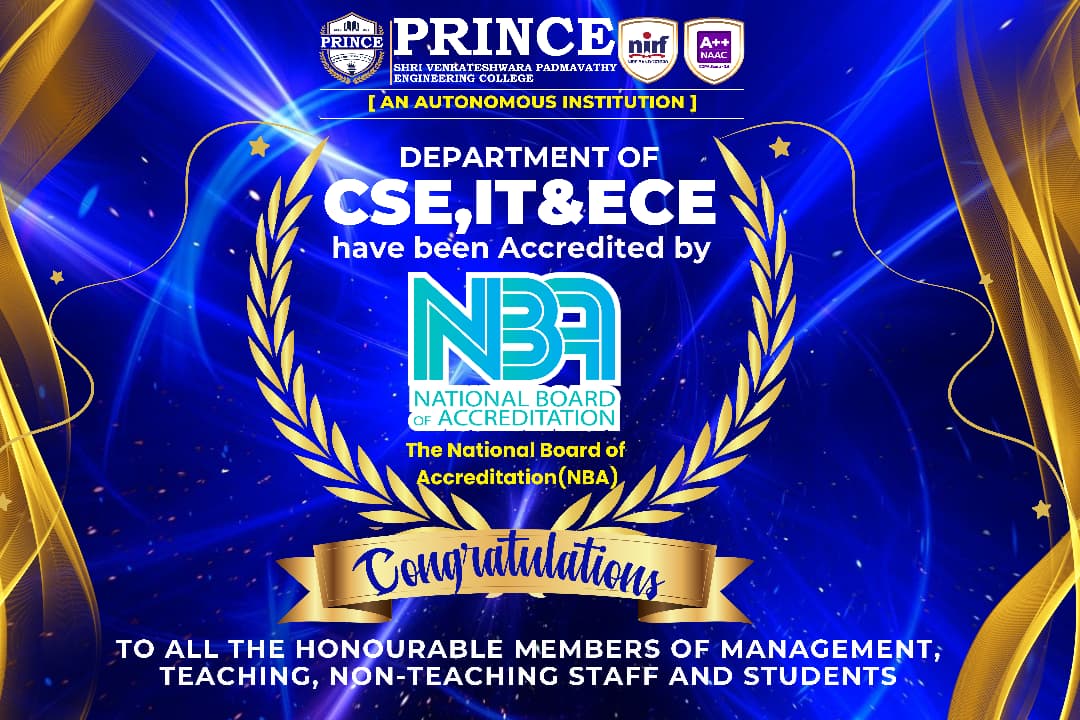
Prince Engineering College has been keen on preserving its image of excellence in academics and pragmatic orientation and also is proud to be accountable to the society and the world in general by offering quality education not only to its students but also imparting to them values, skills, and experiences that would help them in the entire life. The recent recognitions and initiatives can be regarded as this holistic approach as mentioned below.
Recent Highlights of the Institution
Prince அவள் விருது 2025
Prince அவள் விருதu 2025 is a destination to appreciate excellence and empowerment. The event celebrates leadership, contribution and achievement that are significant and especially awards women who are inspirational with confidence, competence and commitment. It strengthens a culture of hard work, influence and leadership.
NSS Unit Award - Service and Impact
The NSS Unit Award is used to acknowledge the regular community service programs the NSS unit has been performing. This recognition is supported by Anna University, and this achievement is a show of the institution in social development, volunteerism and responsible citizenship.
NSS Unit Award - Service and commitment
This acknowledgment shows the commitment and selfless service of NSS volunteers. It displays the involvement of students in the outreach programs, social awareness campaigns, community welfare services and acquiring life skills in addition to academic education.
Global Partnerships
International relationships in Prince are aimed at international cooperation, sharing knowledge and academic exposure. These programs are meant to expand the minds of the students and facilitate innovation in education and research by cross-border interaction.
Prince Engineering College - Academic Excellence
Industry-Aligned Curriculum
Prince College is based on a progressive curriculum which focuses on:
- Strong theoretical outlook
- Applied and practical learning.
- Industrialized outcome-based education.
The academic programmes are frequently revised in line with the new technological trends so that the students remain updated in the competitive job market.
Training and Skill Development
Specialized Training and Placement cell
The Training and Placement Cell in Prince Engineering College is well organized and is striving hard to make students more employable. The cell fills the academic learning and industry needs gap.
Key Training Initiatives
- Training in aptitude and logical reasoning.
- Soft-skills and communication.
- Training on technical skills improvement.
- Mock tests, group discussion and HR interview.
Career Opportunities
Placement Support
PEC facilitates round-the-clock placement services by:
- Campus recruitment drives
- Internship-to-placement pathways
- Career guidance sessions
Students are equipped to suit the requirements of recruiters in the core engineering, IT and allied fields.
Student Development Beyond Academics
NSS and Social Responsibility
Students who are involved in NSS activities are able to:
- Acquire leadership and organizational skills.
- Get real experience with community service.
- Develop social sensitivity and empathy.
Such experiences are supplementary to academic learning, and they make responsible professionals.
Clubs and Co-Curricular Activities.
Prince College promotes the students to participate in:
- Technical clubs and forums of innovations.
- Cultural and sport activities.
- Student chapters and professional societies.
This type of involvement increases confidence, creativity and interpersonal skills.
Global Exposure and Collaborative Learning
The college provides:
- Academic partnerships at the international level.
- Knowledge exchange opportunities.
- Exposure to international best practices in education and research.
Infrastructure and Learning Resources
Prince Engineering College promotes learning by:
- Well-equipped laboratories
- Modern classrooms
- Digital learning systems and library services.
- Systems of research and innovation.
The campus facilities are such that they help in teaching, learning and skill development.
Why is Prince Engineering College the best to choose?
- Strong academic foundation
- Training and placement services.
- Rewards of excellence by institutional awards.
- Social responsibility through NSS.
- Diversifying international partnerships.
- Value-based and student-centered education.
Admissions Update
Academic Year 2026-27 Applications are Open!
Prince Engineering college is welcoming to all aspiring engineers and would like to join an institution that places emphasis on learning, leadership and successful life long experience.
FAQs
1. What encourages innovation at PRINCE College?
- By innovation labs, startup incubators, research cells and technology clubs that introduce imagination and test.
- What advantages does the NSS Unit have to students?
- It develops social responsibility, leadership and real world knowledge.
- What type of training does Prince College offer placements?
- Technical, communication, aptitude and interview-based training.
- Does Prince College have a global exposure opportunity?
- Yes, by cooperating internationally and academically, Prince is rendering opportunities globally.
- Does Prince Engineering College have an open admission?
- Yes, the 2026-27 admissions are open.
Conclusion
Prince Engineering College continues to prepare future professionals in a holistic approach of integrating academics, training, placements, service and exposure to the world. Prince has ensured that its students are ready to face the demands of their professions and contribute immensely to the society through both competence and character.
Blog crafted by Ghowthami M, Content Developer,
Rankyouhigher, Coimbatore.