Prince college is among the reputable engineering colleges, which majors on academic excellence, industry related learning and holistic development of the students. The college is located in Chennai and has been able to gain a fair reputation in terms of delivering technologically qualified and professional graduates under the modern day teaching methods and new training curriculums.
About Prince College
In 2001, Prince Educational Society founded Prince Shri Venkateshwara Padmavathy Engineering College (PSVPEC) the aim of which was to provide quality technical education. It is an AICTE approved school and it falls under the Anna University, Chennai.
Key Highlights
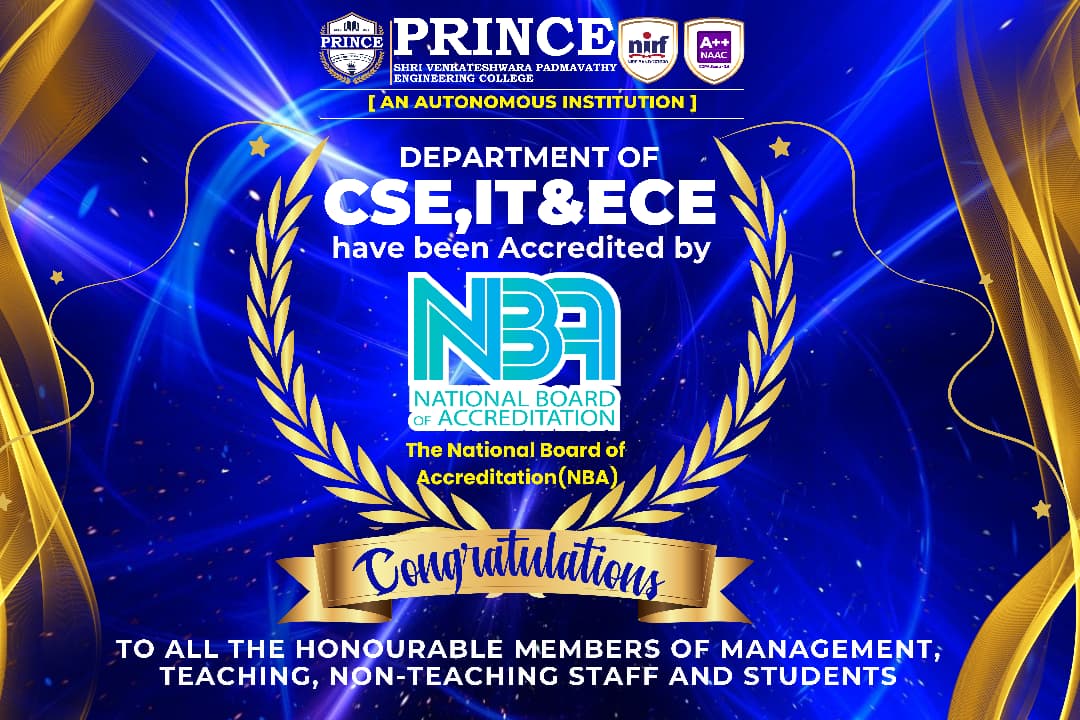
- Engineering course at NAAC.
- Industry-oriented curriculum
- Placement Training
- Progressive Curriculum
The college continues to focus on the quality of academic work and integrates practical learning programs which enable students to be prepared to meet the current technological demands.
“PRINCE – Where Knowledge Meets with Innovation and Careers!”
Industry-Oriented Curriculum and Learning Approach
Prince College is oriented towards closing the gap between the industry demands and the academic education. The curriculum encourages research and innovation and interdisciplinary work among the students.
Learning Features
- Data Science and Artificial Intelligence.
- Cybersecurity Training and Cloud Computing.
- Widely applicable Internet of Things (IoT) learning.
- Innovation Supporting excellence centres.
The process will ensure that the students learn how to solve problems and gain technical confidence to compete in the competitive industries.
“Transforming Students into Industry-Ready Professionals.”
Campus Facilities and Infrastructure
Prince college also has a contemporary infrastructure that is oriented towards academic growth and overall character building.
Academic Infrastructure
- Modern laboratories and computer centres.
- Well furnished library with research facilities.
- Digital classes and conference rooms.
The facilities provide a balanced environment which encourages academic achievement as well as student welfare.
Placement and Career Development Support
Prince college also has an established placement cell that is oriented towards ensuring successful careers of the student.
Placement Training and Support.
- Air-conditioned training and placement halls
- Group discussion facilities, interviews and online testing.
- Frequent interaction programs in the industry.
“Empowering Innovation, Building Careers, Creating Leaders.”
Wholesome Student Development
Prince college believes that education is not only about the text books but about development of personality in general.
Development Activities
- Technical workshops/ innovations projects.
- Real-world experience and on-the-job training.
- Leadership and communication training.
- Cultural and extra-curricular activities.
These programs can help to motivate the students, possess leadership skills, as well as be professionally competent, which is required in the modern work environment.
Why Choose Prince College?
Prince College can be recognized to be committed to offering good education through the support of modern infrastructure and industry exposure.
Strong Academic Reputation
The college regularly updates its curriculum in line with the technological tendencies and needs of the industries in the world.
Experienced Faculty
The faculty members guide, mentor the research and provide industry expertise in order to facilitate student learning.
Career-Oriented Training
The institution provides the place-based training programs in order to ensure that the students are job-ready upon graduation.
Central-Student Learning Environment
Prince College encourages creativity, teamwork and innovation through sponsoring numerous projects and activities of the students.
Conclusion
One of the institutions that have been effective in making future engineers is Prince Engineering College which has incorporated the fields of academic excellence and industry orientation education. This institution provides a great base of professional success by the students in the form of its advanced facilities, superior placement services, and creative learning strategies.
Admissions are open for 2026-27! Check out and grab the opportunity for a bright future at PRINCE!
FAQs
- Why would Prince College be the best choice in the engineering profession?
- Curriculum lean towards the industry, trained personnel, modern infrastructure and high value placed on the placement preparation and competency of the students.
- What are the academic courses found in Prince College?
- It is a college with undergraduate courses of BE and B.Tech in different engineering fields and postgraduate courses of ME and MBA.
- What is Prince College doing to support the placements of students and career development?
- Placement training Systematic, industry exposure, internship and on campus recruitment programs with high ranking multinational and core engineering firms.
- Are there contemporary learning facilities/ amenities on the campuses of Prince college?
- State of the art laboratories, smart classes, research based libraries, hostels, sports and transport.
- What are the non-academic access points to students?
- Technical workshop, innovation projects, externships, leadership programs, cultural and extracurricular activities, participation of the students in them, etc.
Blog crafted by Ghowthami M, Content Developer,
Rankyouhigher, Coimbatore.