MBA - Master of Business Administration

“Shaping Future Business Leaders with Knowledge, Strategy & Innovation.”
-
about the department
-
Message from the Head of the Department
-
Our Vision & Mission
-
Program Outcomes
-
Self Learning
-
Industry Connect
-
Event Gallery
ABOUT THE DEPARTMENT
Founded in 2008, the MBA Department at PSVPEC offers a rigorous two-year full-time program affiliated with Anna University and approved by AICTE, with an intake of 60 students per batch. Our vision is to contribute to individual and national growth through management education, and our mission focuses on equipping students with cutting‑edge skills across marketing, finance, HRM, systems, and operations—complemented by training in business software like MS Office, Java, and VB. We support an inclusive academic environment enriched by a case-based, practice-driven curriculum, a comprehensive library, and a state‑of‑the‑art management lab, fostering critical thinking, leadership, and teamwork. Students undertake both mini and major projects during their course, further enhancing their real‑world application skills. Through guest lectures, workshops, live assignments, and internships, our students gain hands-on exposure to industry practices—positioning them for leadership roles in corporate, banking, finance, tech, and entrepreneurial ventures. With robust infrastructure, dedicated faculty, and a supportive ecosystem, the MBA Department at PSVPEC shapes well-rounded professionals ready to make an impact in today’s dynamic business landscape.
Message from the Head of the Department
MBA
Greetings and welcome to the Department of Management Studies!
Established in 2008, our department has grown into a vibrant and forward-thinking hub of management education, research, and industry engagement. It is a privilege to lead a team that is dedicated to nurturing future leaders and entrepreneurs who are not only academically proficient but also ethically grounded and socially responsible.
Our curriculum is thoughtfully designed to provide a strong foundation in core management principles while fostering innovation, critical thinking, and a global perspective. By integrating theoretical knowledge with practical application through case studies, internships, industry interactions, and activity-based learning, we ensure our students are well-prepared to meet real-world business challenges.
We take pride in our strong industry collaborations, which significantly enhance the learning experience and expand career opportunities for our students. Since its inception, the MBA program at Prince has stood out for its emphasis on experiential learning and its dynamic engagement with the business community.
As we continue this journey, we remain committed to academic excellence, continuous innovation, and shaping professionals who will make a meaningful impact in the world of business.

DR.S.SARA.,MBA.,MPHIL,PHD
HEAD/MBA
Our Vision & Mission


VISION
To develop competent managers with excellent professionalism and focus on research to meet the Global challenges and Demand

MISSION
To impart quality and real time education to contribute in the field of management.
To impart soft skills, leadership qualities and professional ethics among the young graduates.
To develop graduates to compete at the global level.
To deal with the contemporary issues and to cater to the societal needs
PROGRAMME OUTCOMES (POs)
-
Engineering knowledge: Apply the knowledge of mathematics, science, engineering fundamentals, and an engineering specialization to the solution of complex engineering problems.
-
Problem analysis: Identify, formulate, review research literature, and analyze complex engineering problems reaching substantiated conclusions using first principles of mathematics, natural sciences, and engineering sciences.
-
Design/development o solutions: Design solutions for complex engineering problems and design system components or processes that meet the specified needs with appropriate consideration for the public health and safety, and the cultural, societal, and environmental considerations.
-
Conduct investigations of complex problems: Use research-based knowledge and research methods including design of experiments, analysis and interpretation of data, and synthesis of the information to provide valid conclusions.
-
Modern tool usage: Create, select, and apply appropriate techniques, resources, and modern engineering and IT tools including prediction and modeling to complex engineering activities with an understanding of the limitations.
-
The engineer and society: Apply reasoning informed by the contextual knowledge to assess societal, health, safety, legal and cultural issues and the consequent responsibilities relevant to the professional engineering practice.
-
Environment and sustainability: Understand the impact of the professional Engineering solutions in societal and environmental contexts, and demonstrate the Knowledge of, and need for sustainable development.
-
Apply ethical principles and commit to professional ethics and responsibilities and norms of the engineering practice.
-
lndividual and team work: Function effectively as an individual, and as a member or leader in diverse teams, and in multidisciplinary settings.
-
Communication: Communicate effectively on complex engineering activities with the engineering community and with society at large, such as, being able to comprehend and write effective reports and design documentation, make effective presentations, and give and receive clear instructions.
-
Project management and finance: Demonstrate knowledge and understanding of the engineering and management principles and apply these to one's own work, as a member and leader in a team, to manage projects and in multidisciplinary environments.
-
Life-long learning: Recognize the need for, and have the preparation and ability to engage in independent and life-long learning in the broadest context of technological change.
PROGRAMME EDUCATIONAL OBJECTIVES (PEOs)
PEO1. To have a thorough understanding of the core aspects of the business.
PEO2. To provide the learners with the management tools to identify, analyze and create the business opportunities as well as solve business problems.
PEO3. To prepare them to have a holistic approach towards management functions.
PEO4. To motivate them for continuous Learning
PROGRAMME SPECIFIC OUTCOMES(PSO)
PSO1: Ability to apply the business acumen gained in practice.
PSO2: Ability to understand and solve managerial issues.
PSO3.Ability to communicate and negotiate effectively, to achieve organizational and individual goals.
PSO4.Ability to understand one’s own ability to set achievable targets and complete them.
PSO5. Ability to fulfill social out reach
self learning
| S.No | Subject | Topic | Staff | Link | View Count |
|---|---|---|---|---|---|
|
Content |
Content |
Content |
Content |
Content |
Content |
|
Content |
Content |
Content |
Content |
Content |
Content |
|
Content |
Content |
Content |
Content |
Content |
Content |
Industry Connect
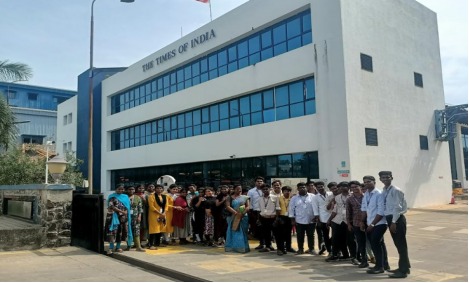
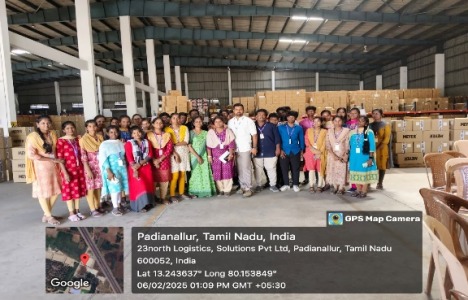
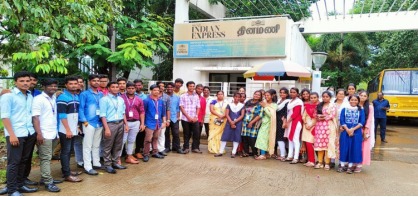
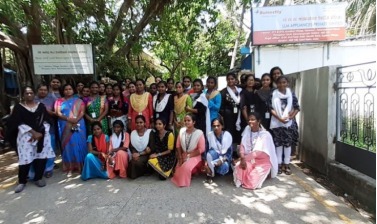
Our MBA’s Industry Connect initiative serves as a powerful bridge between rigorous academic learning and dynamic corporate environments. Through strategic partnerships and MoUs with leading companies, we embed live projects, internships, and industrial visits directly into the curriculum—allowing students to collaborate on real business problems alongside industry practitioners .Regular guest lectures and workshops led by senior professionals—ranging from CXOs to domain experts—provide insider insights, mentoring, and networking opportunities, expanding students’ perspectives and professional horizons Our program emphasizes authentic relationship-building, encouraging mentorship, alumni engagement, and continuous follow-up, ensuring each student develops a robust professional network that lasts well beyond graduation .This ecosystem not only sharpens leadership and problem-solving skills but also gives students a distinctive competitive edge in today’s global business landscape.
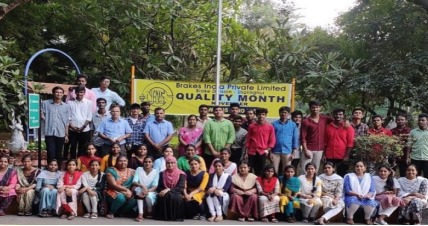
Event Gallery
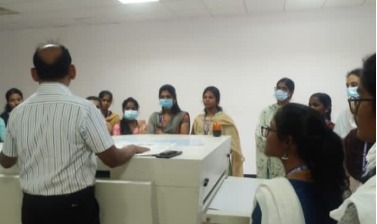
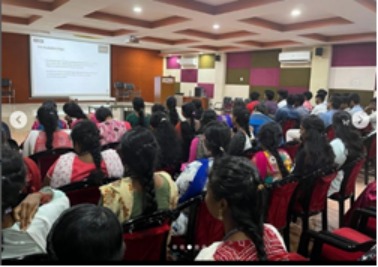
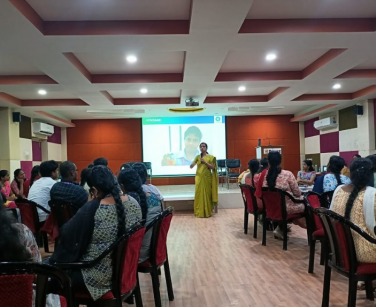
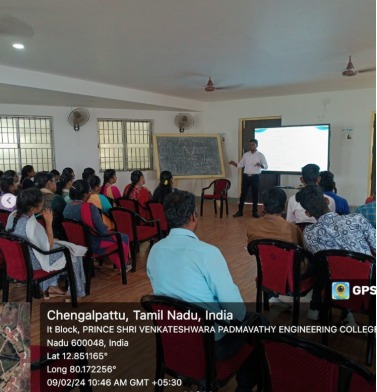
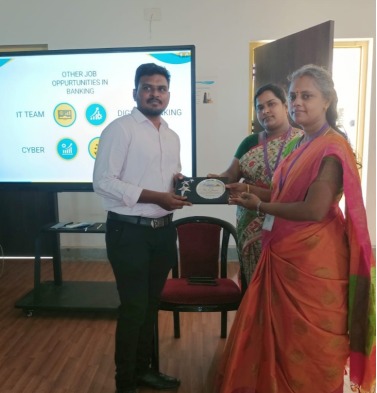
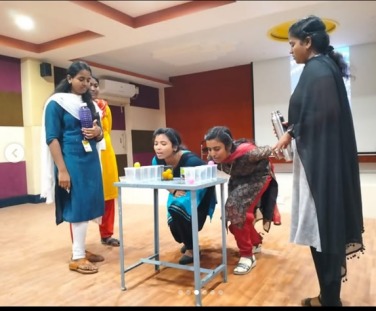
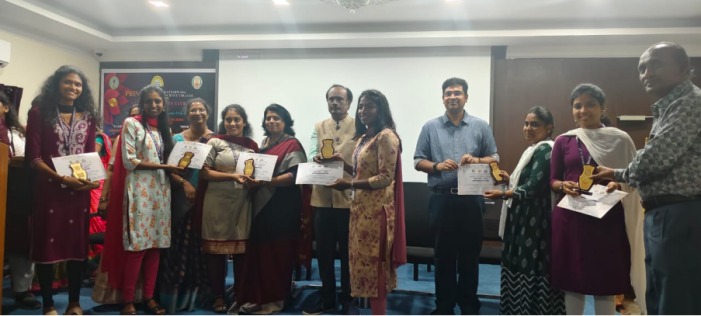
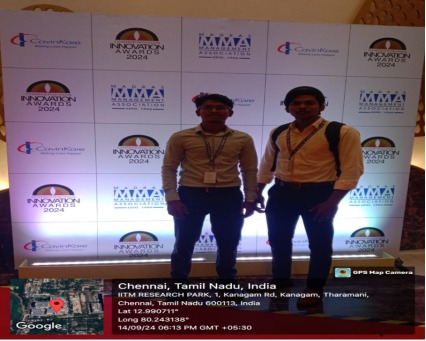
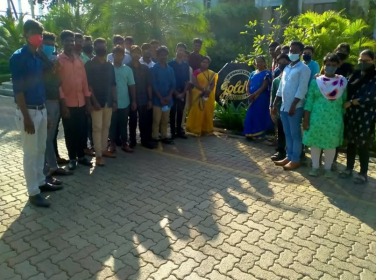
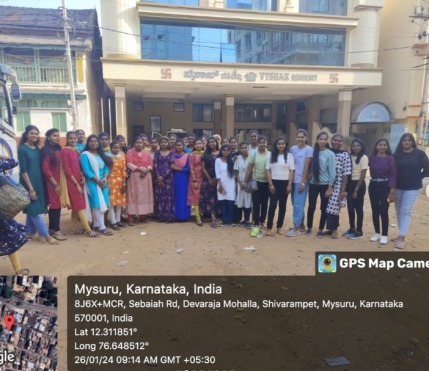
Our Event Gallery captures the vibrant energy and dynamic culture of the MBA program at PSVPEC. From inaugural days that bring together new and returning students for team-building and orientation, to intellectually stimulating guest lectures and workshops led by industry leaders, and from real-world project showcases to festive alumni networking events—each photo narrates a unique story. Through these visual journeys, you’ll witness our students collaborating in brainstorming sessions, presenting their live projects, celebrating academic and extracurricular achievements, and forging lasting connections with peers, faculty, and professionals. Together, these moments reflect the spirit of innovation, leadership, and community that define our MBA experience and inspire prospective students to envision their own paths with us.